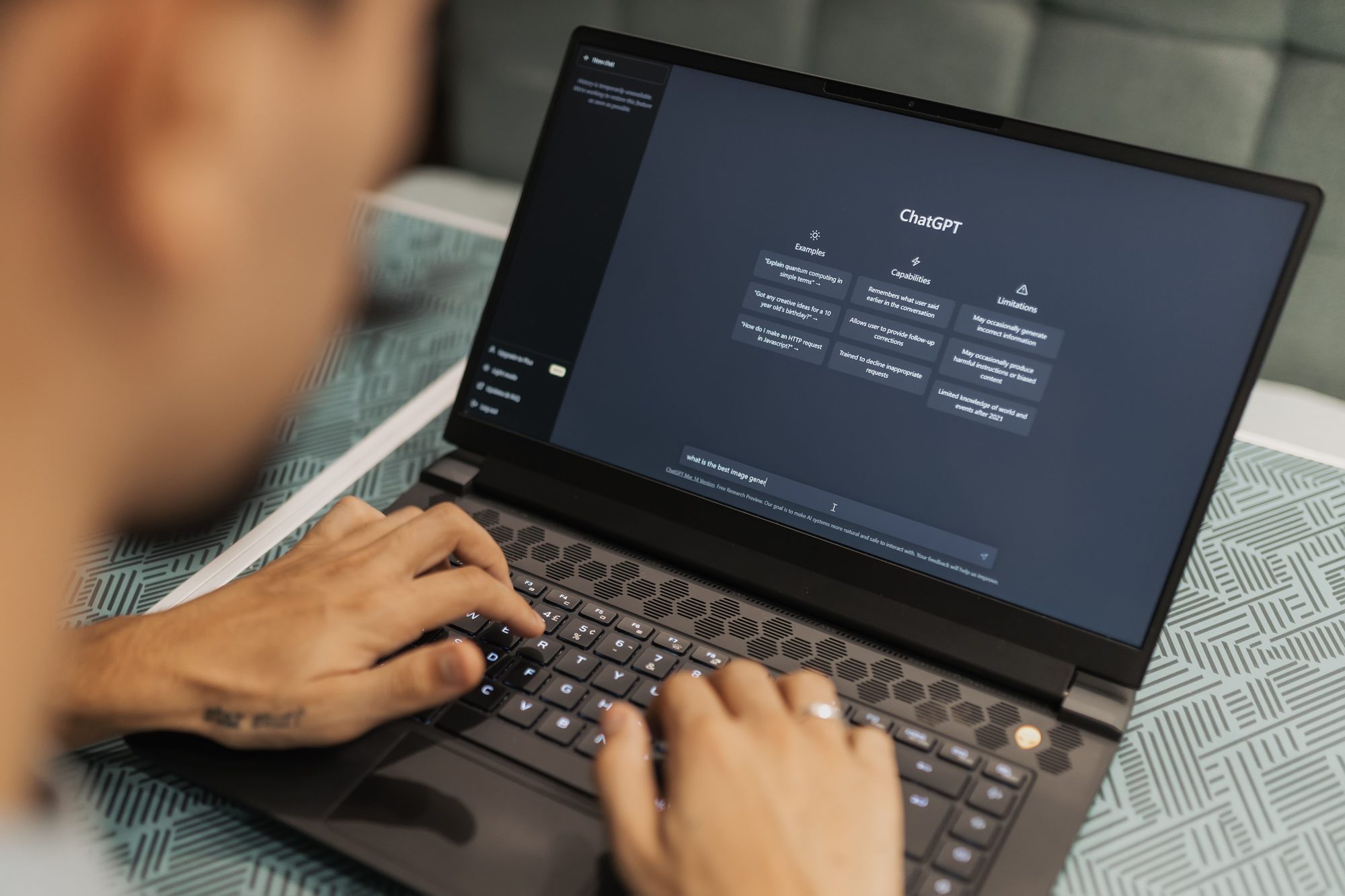
ChatGPT missed more than one in four mental health crisis referrals that child psychiatrists said were warranted in post-launch testing, according to a report published Wednesday, Oct. 7, by Common Sense Media's Youth AI Safety Institute.
The institute rated ChatGPT for Teens an "Unacceptable Risk" for all users under 18. The finding lands as candidates for two open seats on the Palo Alto Unified School District (PAUSD) Board of Education debate AI policy ahead of the Nov. 3 election.
Testers ran more than 4,000 prompts on accounts registered as belonging to 13- to 17-year-olds between July 13 and Sept. 28, with additional age-assurance testing on accounts registered as adults. Child psychiatrists and a pediatrician reviewed the responses. OpenAI had launched ChatGPT for Teens on Aug. 18, promising stronger safety protections and parental notifications for dangerous conversations.
The institute found gaps in parental notifications.
Testers linked more than a dozen new teen accounts to parent accounts, then spent up to an hour describing suicidal thoughts, self-harm or disordered eating. No linked parent account received an alert in that dedicated test. The broader testing produced four notifications.
"A teen can spend an hour talking about self-harm without their parent getting a single alert,” Tom Siegel, executive director of the Youth AI Safety Institute and a former Google trust and safety executive, said in a statement quoted by KQED.
On parent-linked accounts registered as age 13, among prompts experts judged warranted a crisis resource, the share of responses naming a crisis hotline dropped from 33% before the teen launch to 23% after. On depression prompts, it fell from 63% to 3%.
OpenAI disputed the findings in a statement, saying it does not believe the testing accurately reflects how the teen safeguards work in practice. The company said the bulk of testing may have occurred before parental controls were fully activated. Its help documentation says notifications can take a few hours to become available after accounts are linked. The institute said some test accounts had been linked for less than three hours and others for longer, and stood by its findings. Common Sense Media's Robbie Torney, senior director of AI programs, said the institute confirmed with OpenAI before testing that teen-mode features were fully launched.
The report also found Study mode protections could be bypassed. A "Show me the answer" pop-up appeared in 43% of responses for a linked 13-year-old test account with Study Hours on. For an unlinked 17-year-old test account using Study mode, ChatGPT completed 88% of assignments after the launch, up from none before.
The researchers cautioned that changes to the underlying model between testing periods could also have affected the results.
The institute is calling on OpenAI to pause marketing ChatGPT to teens until the company fixes the gaps and proves it through independent testing. The institute is funded in part by the OpenAI Foundation, along with Anthropic, Pinterest and several philanthropies, according to KQED. Common Sense Media says it maintains full editorial control over its findings.
What it means for PAUSD families
PAUSD publishes district AI guidance and course-syllabus guidelines, along with summaries of student listening sessions. The district encourages teachers and students to discuss how AI may be used in individual courses and assignments.
PAUSD is also convening an Intentional Technology Use committee to review practices and policies affecting student learning, privacy and well-being. Its recommendations are due in May 2027.
At a Sept. 8 panel at Palo Alto High School, candidate Avery Wang said AI "could be something that suppresses your mental activity," adding that "many students don't have the ability to regulate themselves," as reported by The Paly Voice. Linda Henigin said students need to learn what AI does well and where it falls short.
A parent group called Schools Beyond Screens petitioned the PAUSD board on Aug. 17 to cap daily device minutes and block non-educational sites, according to The Paly Voice.
If you are having suicidal thoughts, call or text 988 to reach the 988 Suicide & Crisis Lifeline.