Santa Clara County's largest reservoir will be torn down and rebuilt after Valley Water's Board of Directors awarded a $1.88 billion construction contract on Friday, July 24.
The project will restore Anderson Reservoir to full capacity, replenishing the groundwater basin that Palo Alto and every other city in the county draws from.
The board awarded the contract to Flatiron Dragados Sukut ADSRP Joint Venture, according to a Valley Water news release. At a total cost of about $2.8 billion for the dam rebuild alone, it is one of the largest infrastructure projects in the agency's history. Construction is scheduled to begin January 1, 2027, and finish by 2033.
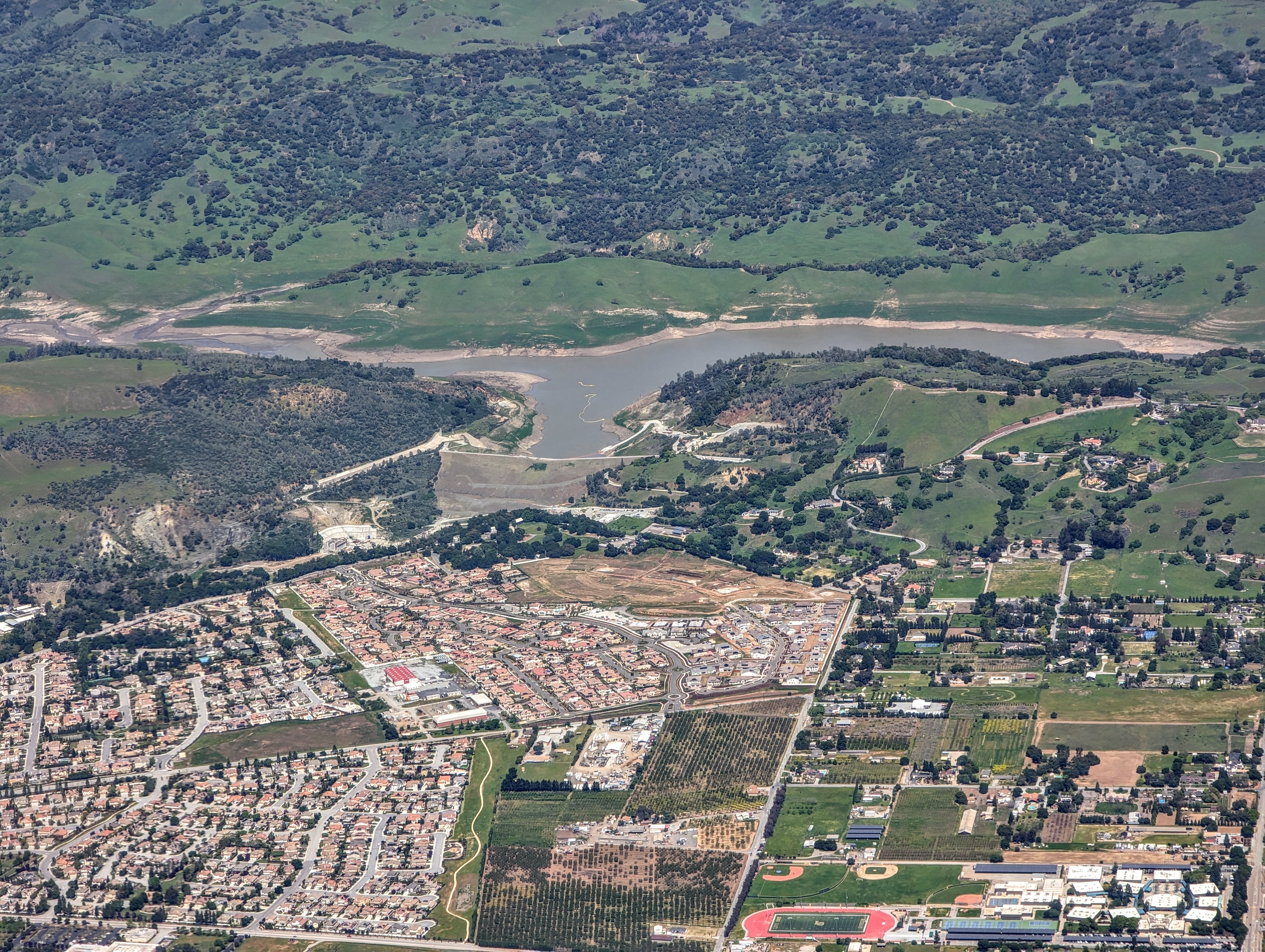
Anderson Reservoir holds roughly 90,000 acre-feet of water at full capacity, more than Valley Water's other nine reservoirs combined. It provides about 25 percent of the county's annual water supply, releasing water year-round into Coyote Creek to recharge the groundwater basins that supply 45 percent of all water used in Santa Clara County.
Since 2008, the reservoir has been restricted to about 58 percent of capacity after independent engineering reviews found the dam's foundation contains sand and gravel susceptible to liquefaction in a major earthquake. In 2011, federal and state regulators classified it as "High Hazard Potential."
The stakes are severe. Engineers concluded that a complete failure at full capacity could send a 35-foot wall of water into downtown Morgan Hill within 14 minutes and flood parts of San Jose to 8 feet deep within three hours, the Mercury News reported.
For Palo Alto, the connection is groundwater. The city's drinking water comes primarily from the San Francisco Public Utilities Commission's Hetch Hetchy system, but Valley Water manages the regional groundwater basin the city also taps. With Anderson operating at reduced capacity for nearly two decades, the county has lost significant water storage that buffers against drought. Valley Water abandoned plans for a new reservoir near Pacheco Pass in 2025, making the Anderson rebuild the agency's primary water storage investment.
"We have too much inflation, too many tariffs, and this administration is not doing anything to help us," Valley Water Board Chair Tony Estremera said at the July 24 meeting. "We try our best to keep costs as low as possible. But it is really necessary for us to rebuild Anderson."
Most of the project cost will be paid through higher water rates over the coming decades, according to the Mercury News. Valley Water has secured more than $114 million in state and federal grants since 2023 and is pursuing additional funding to limit rate increases. No specific dollar-per-household figure has been released.
The project's price tag has ballooned over time: from $193 million in 2011, to $400 million in 2016 after new fault lines were discovered, to $2.3 billion in 2023. Estremera attributed the latest increases to inflation, labor costs, and building material prices driven by federal tariffs.
Construction crews will build six miles of haul roads and two temporary bridges in 2027, tear down the existing 240-foot-tall earthen dam in thirds from 2028 to 2030, and build the new dam in 2031 and 2032. The reservoir should take roughly two years to fill under average winter rainfall after that.
A separate precursor project, the Anderson Dam Tunnel, is on track for completion by late 2026. The new 13-foot-diameter tunnel replaces the dam's existing 4-foot outlet pipe and will be functional by winter 2026-27.