A new federal rule capping international student visas at four years will hit Stanford's graduate programs hard when it takes effect Tuesday, September 15, just weeks after PAUSD opens for the 2026-27 school year.
The Department of Homeland Security published the final rule on Saturday, July 18, eliminating the decades-old "duration of status" policy that let F-1 and J-1 visa holders remain in the U.S. as long as their academic program required. In its place: a four-year maximum, with extensions available only through a formal USCIS filing.
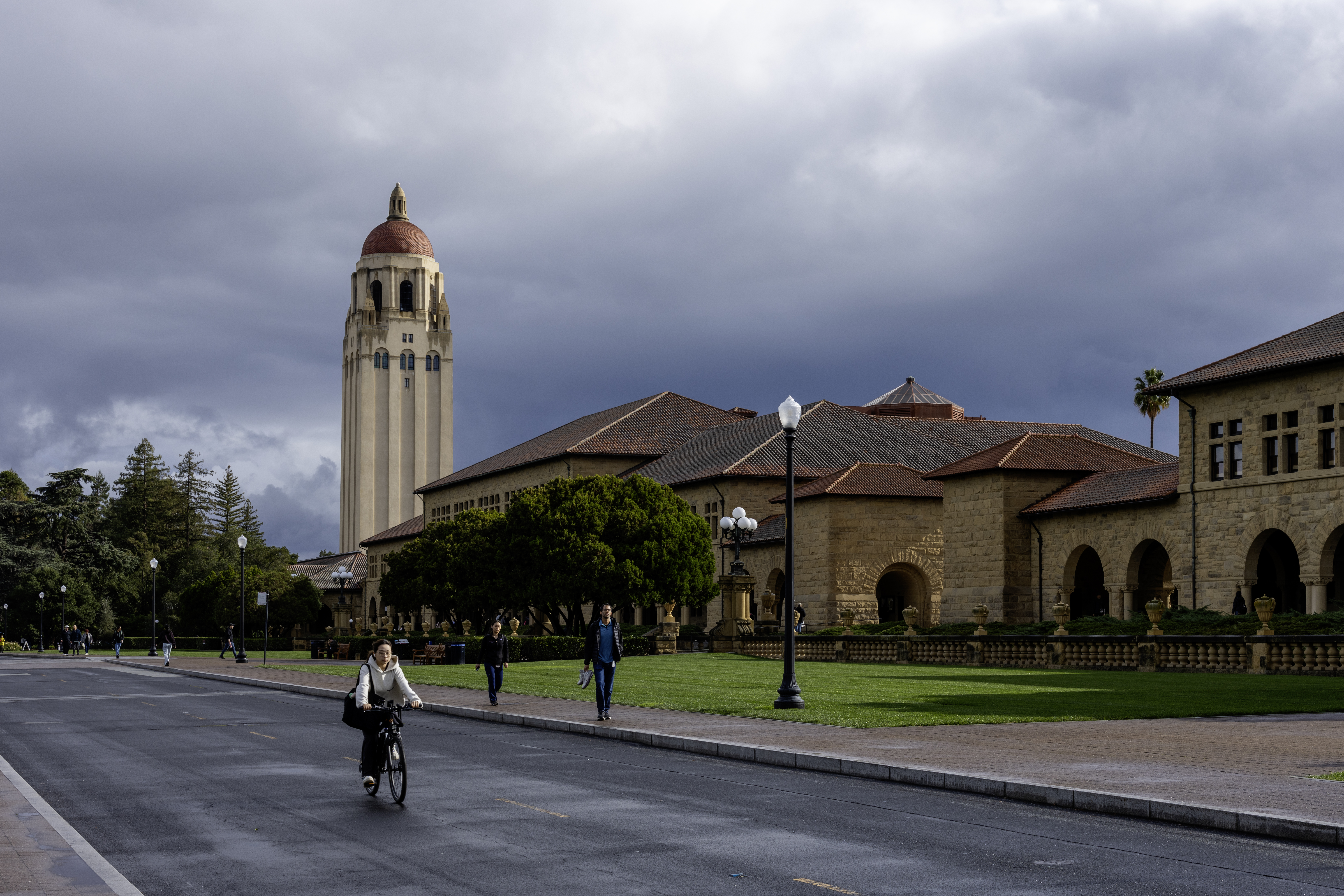
That's a direct problem for Stanford, where about 3,500 of the university's 10,025 graduate students are international, according to Stanford's 2025 enrollment data. Engineering and sciences account for the largest share of Stanford's graduate programs, and doctoral work in those fields routinely takes five to six years.
What the rule does
Under the new framework, detailed by immigration law firm Mintz, international graduate students can no longer transfer institutions or change academic programs at any point during their studies. Students who complete one degree are barred from pursuing another at the same level on an F-1 visa. The post-completion grace period shrinks from 60 days to 30.
The stakes for missing a deadline are severe. Students who overstay their new fixed expiration date begin accruing unlawful presence immediately. More than 180 days triggers a three-year ban on reentry; more than a year, a ten-year ban.
A transition provision offers some protection: F-1 students already in the U.S. on September 15 may remain through their program end date, capped at November 14, 2030. Those who file for Optional Practical Training by March 18, 2027, won't need a separate extension application.
Stanford's exposure
Stanford's graduate programs span engineering (39%), humanities and sciences (23%), medicine (14%), and business (10%). Doctoral programs in those fields regularly exceed the new four-year cap. The Graduate School of Business enrolled 426 MBA students in Fall 2025; the two-year MBA fits within the limit, but doctoral and joint-degree programs at the GSB and Law School often do not.
The Optional Practical Training pipeline, which lets STEM graduates work in the U.S. for up to 12 months plus a 24-month extension, remains intact. But students who travel internationally after September 15 and reenter will receive only the shortened 30-day grace period.
Stanford's Bechtel International Center, which advises the university's visa holders, has not issued a public statement on the rule.
Local context
Palo Alto Unified has long drawn families whose immigration status ties to Stanford and the tech industry. Native Mandarin speakers made up a record 14% of PAUSD enrollment in 2024, up from 10% in 2015, according to the San Francisco Chronicle. Superintendent Don Austin called PAUSD a "destination district" shaped by Stanford and tech in a Chronicle interview last year.
No public guidance from PAUSD on how the rule affects families with children on F-2 or J-2 dependent visas has surfaced. The district does not publicly report enrollment by visa status.
As San José Spotlight reported Wednesday, the rule's ripple effects extend across Silicon Valley. William Sundstrom, an economics professor at Santa Clara University, noted that nearly 70% of Silicon Valley tech workers are foreign-born, many of whom arrived as students. "We were already seeing some serious declines in international student enrollments," Sundstrom told San José Spotlight. "The Trump administration's general hostility to immigrants, both undocumented and documented, has created delays in the processes, denials of F-1 visa applications and a general sense of discouragement to come and study here."
DHS Secretary Markwayne Mullin framed the rule as a security measure, saying it ensures foreign students "remain focused on their primary purpose: completing their studies and returning home."
The rule has been classified as a "major rule" under the Congressional Review Act, meaning Congress could still block it before September 15. No such action has been introduced.