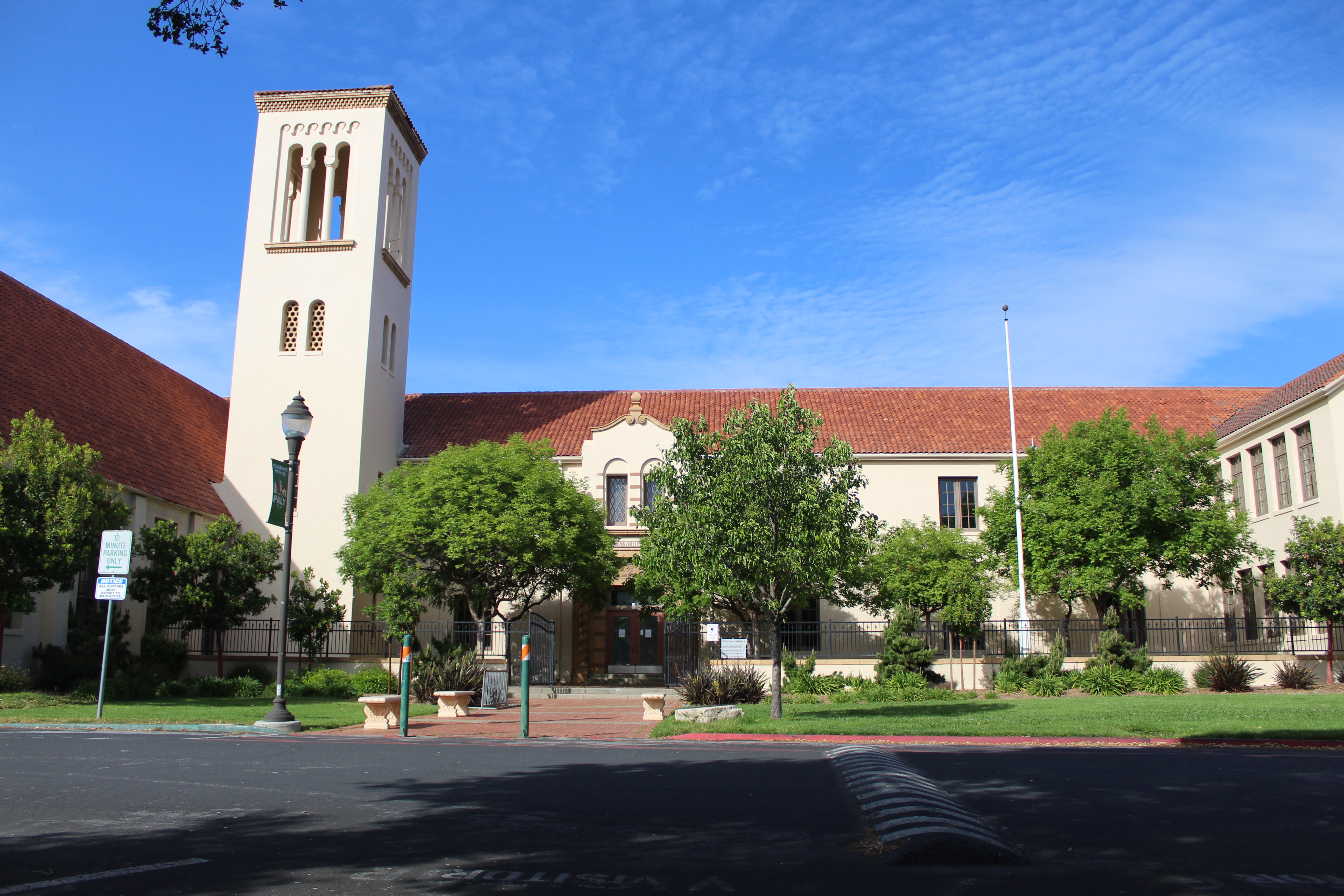
Potential candidates for the two open Palo Alto school board seats have until Wednesday, Aug. 12 to file, five days past the original Aug. 7 cutoff.
The extension applies because both incumbents, Shounak Dharap and Shana Segal, declined to seek re-election, triggering California's five-day extended nomination period. The Santa Clara County Registrar of Voters confirms the extension period ends Aug. 12.
Three candidates are seeking the two seats: Avery Wang, John Craig and Linda Henigin. All are PAUSD parents. Henigin formally filed her paperwork on July 27; Wang and Craig had announced their candidacies but had not completed nomination forms as of late July.
Who's running
Linda Henigin, 56, is an instructional aide at Duveneck Elementary with a master's in secondary education from Bank Street College of Education. She serves on the executive board of the Palo Alto Council of PTAs, sits on the board of Pathwise (formerly DreamCatchers), and helped revitalize Track Watch Palo Alto, a volunteer effort to monitor rail crossings and prevent youth suicide. She has a middle schooler and a high schooler in PAUSD.
Avery Wang, 60, co-founded Shazam, the music-identification app Apple acquired for roughly $400 million in 2018. He holds a PhD from Stanford and works as a principal research scientist at Apple. Wang sued PAUSD in 2020 over math placement, a case the district settled by advancing his son and paying $5,000. He has donated to local political candidates including board Vice President Rowena Chiu.
John Craig is vice president of revenue and customer service at RIOS Intelligent Machines, a Menlo Park AI company. In an April 20 LinkedIn post cited by Palo Alto Online, Craig compared the district to "a dumpster fire" that "has been left alone for a long time with few people doing anything about it."
Wang and Craig have both advocated publicly for reinstating Multivariable Calculus at PAUSD high schools and align with Chiu's positions on academic rigor. Henigin has focused on teacher pay and rebuilding community trust around school funding.
What's at stake
Whoever wins will inherit a district in financial trouble. PAUSD's Measure B parcel tax failed on June 2, falling short of the required two-thirds supermajority with 60.83% support. The $800-per-parcel tax would have raised $14.5 million annually.
New labor contracts that include back-to-back raises of 5% and 5.4% plus two $5,000 bonuses are projected to drain district reserves from $104.1 million to $24.8 million by the end of the 2026-27 school year, according to the Palo Alto Daily Post. Chief Business Officer Charen Yu warned in June that reserves could fall below the state-required 3% minimum by 2029-30.
"We need to build trust with our community and be really clear about what it would be spent on, and why it's necessary," Henigin told the Daily Post on July 27, referring to a potential future parcel tax attempt.
The new board members will also work alongside Superintendent Jason Glass, hired June 16 on a four-year contract at $396,136 in base salary. The board approved his contract 4-1, with Chiu dissenting.
Voters will decide the race on Tuesday, Nov. 3. Vote-by-mail ballots begin going out Oct. 5.