More than 130 Palo Alto homes must meet California's new Zone 0 fire-landscaping requirements once the rules take effect.
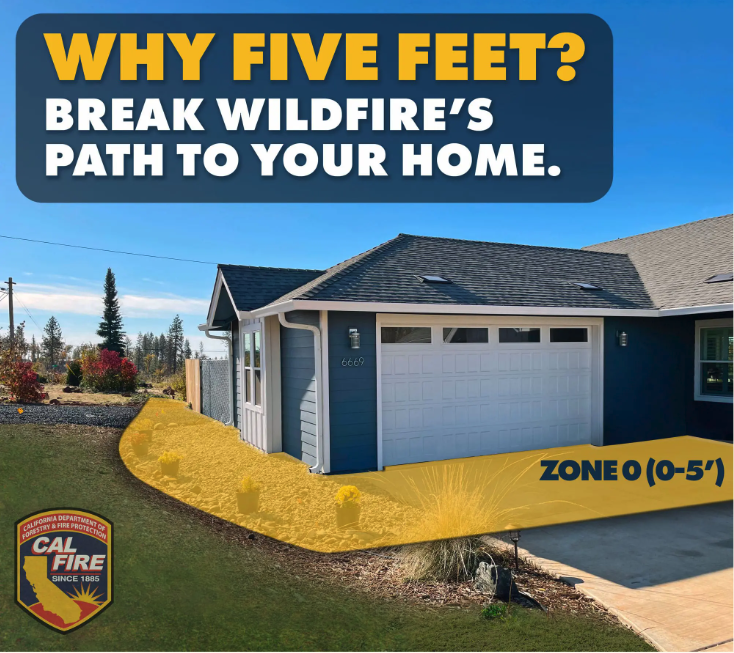
The California Board of Forestry and Fire Protection voted 8-0 on Aug. 19 to adopt the rules, which create an ember-resistant zone within five feet of a home. The regulations apply to homes in very-high fire hazard severity zones, including properties in the Palo Alto Hills and near Foothills Nature Preserve and Pearson-Arastradero Preserve, according to acting Fire Marshal David Villarreal, as Palo Alto Online reported.
Statewide, the rules affect an estimated 2 million homes, the Los Angeles Times reported. They are the first defensible-space regulations of their kind in the nation. A UC Berkeley study of five major California fires from 2017 to 2020 found that properties with no precautions had a 20% survival rate. Those that cleared vegetation from Zone 0 survived at a 37% rate. Comprehensive home hardening and defensible space pushed survival to 48%.
What the rules require
Existing homeowners get a phased timeline. New construction must comply immediately. The Press Democrat detailed the two phases:
Phase 1 (within three years): Remove combustible items within five feet of the home. That means firewood, dead leaves, branches, mulch and wood chips. Roofs and gutters must be kept clear. Dead and dying plants must go.
Phase 2 (within five years): Create a one-foot vegetation-free safety zone around the home, extending to the end of roof eaves. No vegetation is allowed within two feet of windows, doors and vents, or within five feet of attached decks. Combustible wooden gates and fencing attached to the home must be replaced with noncombustible materials. Sheds within the five-foot zone need noncombustible exterior roofs and walls.
Potted plants, grass lawns and some flowers are still permitted outside the one-foot buffer if well maintained. Existing trees can remain.
Practical steps for Palo Alto homeowners
Lisa Parramore, an outdoor-living designer with Harrell Design + Build in Mountain View, has been helping homeowners in Los Altos Hills, Woodside and Hillsborough prepare. Her firm held a workshop in May on hillside living that included home-hardening examples from Portola Valley and Los Altos Hills.
Parramore said fire-hardening solutions come at different price points and don't require homeowners to replace everything at once. Her recommendations include:
- Replacing wood chips, bark and dried mulch with gravel, decorative rock, pavers, decomposed granite or bare earth
- Using decorative metal privacy screens instead of dense vegetation or combustible fencing
- Installing ember-resistant vents or covering existing vents with 1/8-inch metal wire mesh
Privacy is a common concern. "When I was standing at a client's house recently in Portola Valley, we were looking across the road, and she just looked at a house and said, 'I couldn't see that house before,'" Parramore said. The homeowner had cleared trees around the house. "That's a tiny loss of privacy."
Brett Poole, co-founder of BRP Enterprises and a former firefighter who offers home-hardening services, cautioned homeowners against assuming they're safe because they don't live in a very-high fire severity zone. Embers from a nearby house fire can ignite a home the same way a wildfire can, he said. Insurance companies are also canceling policies or using drones to inspect properties for branches and foliage touching homes, Parramore said.
Help paying for it
Seth Schalet, CEO of the Santa Clara County FireSafe Council, said cost is a real barrier for homeowners on fixed or lower incomes. The FireSafe Council is seeking grants to help cover some costs.
Separately, California's Safe Homes grant program took effect Jan. 1 with $3 million in initial state funding, according to CalMatters. The program targets low- and middle-income homeowners in high-risk areas who carry insurance through admitted carriers or the FAIR Plan. Grant amounts and application details had not been finalized as of early 2026.
What Palo Alto is already doing
The Palo Alto Fire Department (PAFD) already conducts annual defensible-space inspections and clears vegetation along evacuation corridors, including Page Mill Road and Arastradero Road, Villarreal said. The city also enforces building codes for new construction and major remodels in the foothills.
In 2024, PAFD, the FireSafe Council and the city's Community Services Department installed wildfire-detection sensors in the wildland-urban interface, according to the city's 2025 Community Wildfire Protection Plan update. Foothills Park Rangers complete annual fuel reduction across roughly 420 acres in the Foothills and Arastradero Nature Preserves and Esther Clark Park.
The Zone 0 rules were still awaiting final review by the California Office of Administrative Law as of early September. Once that review is complete, the three-year and five-year compliance clocks begin.