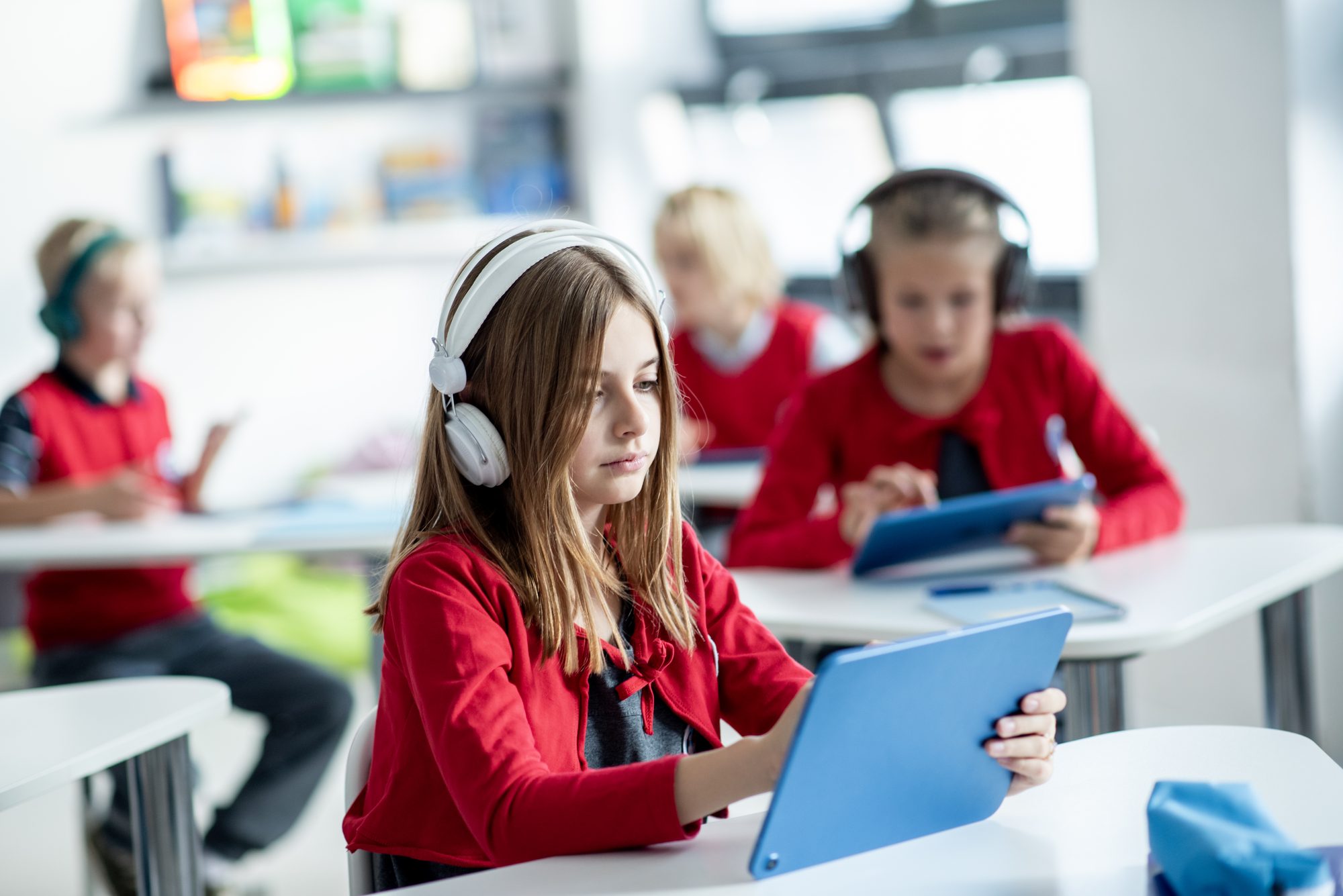
Palo Alto parents are pushing the school district to cut back on classroom screen time, joining a national movement calling for tighter limits on how students use technology at school.
The local chapter of Schools Beyond Screens presented a petition at the Monday, Aug. 17 PAUSD board meeting calling for no screens through first grade, daily device-minute caps for older students, blocked non-educational sites like YouTube and an end to required take-home laptops. The petition is modeled after Los Angeles Unified School District's (LAUSD) new policy, which took effect this fall.
Leor Melamedov, co-captain of the Palo Alto chapter, told The Paly Voice on Aug. 25 that the effort targets classroom distractions, not technology education itself. "It's not anti-technology; it's anti-distraction," Melamedov said.
PAUSD parent Candace Wei singled out i-Ready, a digital diagnostic and curriculum program used for math and language arts. Wei told KQED there is "no evidence that it actually helps kids" and that the program creates confusion for parents who receive scores they cannot interpret.
Wei also pointed to neighboring Mountain View Whisman School District, where parents pushed back when the district tried to drop i-Ready, worried their children would lose preparation for honors algebra placement.
Mountain View Whisman spokesperson Shelly Hausman said the district is moving away from i-Ready diagnostic assessments for 2026-27, shifting toward teacher-created tests aligned with state standards. Fifth- through eighth-graders will still take i-Ready math diagnostics three times this year, and the program remains one of two measures for math placement.
The movement is growing across the Bay Area.
Schools Beyond Screens, founded in 2025 by Los Angeles parents after California passed statewide legislation restricting students' cellphone use, now has more than 200 chapters in 38 states and 11 chapters in the Bay Area. The organization says it is tracking more than 70 districts that have changed or are considering new tech policies.
LAUSD board member Nick Melvoin's "Using Technology With Intention" resolution passed in April 2026, banning digital devices in classrooms through first grade and imposing strict minute caps for older students. LAUSD also rolled back its one-to-one device program.
One-to-one device programs now exist in 88% of U.S. public schools, according to the National Center for Education Statistics. Nationally, standardized reading and math scores were lower in 2025 than in 2015 in 83% and 70% of districts, respectively, according to a New York Times analysis cited by KQED.
At the Aug. 17 board meeting, supporters included Palo Alto High School Early Child Development teacher Jennifer Pierson, district parents Emma van Niekerk and Haleh Mousavi, and Barron Park Playschool owner Kim Adams. Adams told the board she was there "to talk about what screens replace — and that is relationships, movement, and play," as reported by The Paly Voice.
Elsewhere in the Bay Area, Schools Beyond Screens organizers say school board candidates’ technology policies will factor into their votes this November. Miranda Arly, who started a chapter covering Sunnyvale, Mountain View and Los Altos in May 2026, told KQED she will be evaluating candidates' positions on screen policy.
The PAUSD board voted 5-0 on June 2 to call the Nov. 3 general election.