Palo Alto is celebrating the completion of its $7 million horizontal levee at the Baylands, and the city wants residents to come see it.
The City of Palo Alto announced a public celebration for Thursday, Sept. 10, marking the completion of the Horizontal Levee Pilot Project on Harbor Marsh. The city posted the invitation on Aug. 23, welcoming regional leaders, community members and community groups to the event.
Palo Alto Mayor Vicki Veenker is expected to attend, according to the city's Facebook announcement.
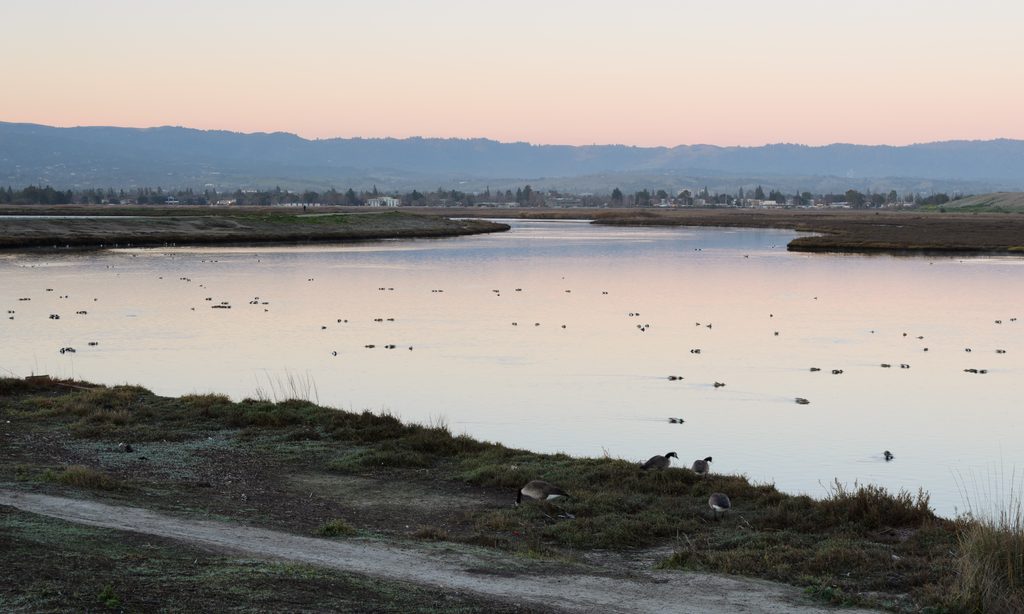
The 500-foot stretch of shoreline in the Baylands Nature Preserve is the first horizontal levee on the San Francisco Bay to be hydrologically connected to the water. Once fully connected, the underground plumbing is designed to link the gently sloped, plant-covered embankment to the city's Regional Water Quality Control Plant across the street, delivering up to 100,000 gallons of treated wastewater daily to irrigate more than 35 species of native plants. As the water filters through soil, gravel and root systems, the plants strip nitrogen before it reaches the Bay.
As we reported Aug. 13, the project began in 2018 and faced delays connecting the plumbing from the treatment plant to the levee. Construction was confirmed underway in November 2025, and the Association of Bay Area Governments said at the time the project was expected to wrap in early 2026.
The levee replaces the steep, rock-armored walls typical of Bay flood barriers with a gradual vegetated slope. Mark Lindley, lead engineer on the project, told Grist in an Aug. 11 article: "When you look at levees that are along the bay front, a lot of times they've got really steep faces and big, huge rocks in front of them to protect them from wind waves. By having this flat, gradual slope with really dense vegetation on it instead of having rock, the waves break on that slope like they do on a beach."
The project restores seasonal and perennial wet meadows, freshwater marsh, riparian scrub and upland habitat. The salt-marsh harvest mouse, an endangered rodent small enough to fit in a palm, is among the species expected to benefit.
Funded by grants from the California Coastal Conservancy and the U.S. Environmental Protection Agency, the pilot was built by Corcus Construction, managed by Zoon Engineering and planted by Save The Bay. The San Francisco Estuary Partnership co-led the effort with the city.
Researchers from the U.S. Geological Survey, California State University Channel Islands and UC Davis will monitor the site over five years, studying biodiversity, water quality and habitat performance compared to traditional levees. About a dozen similar projects are in various stages of design around the Bay.
Bay Area sea levels are projected to rise 3 to 6 feet by 2100. Lindley told Grist that within 20 years, areas flooded only during king tides will flood daily. The city has not published a specific time or address for the Sept. 10 celebration.