Hans Andersen, a theoretical chemist who spent nearly six decades at Stanford and whose computer simulation methods now quietly power drug development and battery design worldwide, died July 4. He was 84.
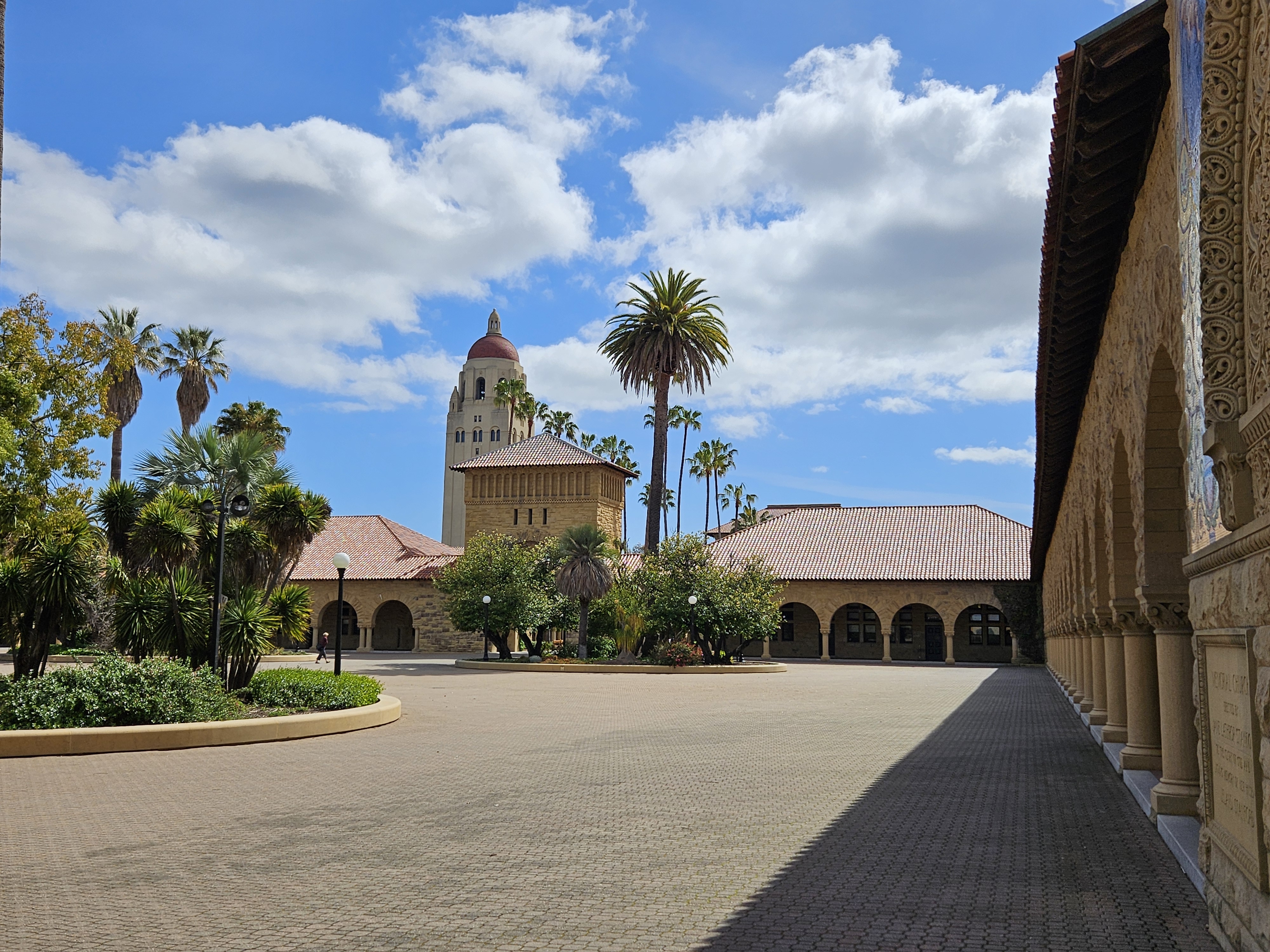
Andersen joined Stanford as an assistant professor of chemistry in 1968 and never left, according to a Stanford University obituary published Aug. 3. Over the decades that followed, he co-developed the Weeks-Chandler-Andersen theory of liquids, invented techniques for simulating molecules under real-world pressure and temperature, and created models that reshaped how scientists study glass formation. His tools became so standard that researchers often use them without knowing his name.
"Hans built the kind of science that undergirds and ultimately disappears into everyone else's," said Todd Martínez, who now holds Andersen's former endowed chair as the David Mulvane Ehrsam and Edward Curtis Franklin Professor in Chemistry at Stanford. "His thermostat and barostat are now so ubiquitous that they often go uncredited."
The National Academy of Sciences elected Andersen in 1992. He was also a fellow of the American Academy of Arts and Sciences and the American Association for the Advancement of Science.
Yet colleagues remember him as much for his teaching as his research. Stanford awarded him the Walter J. Gores Award for Excellence in Teaching in 1972-73 and the Dean's Award for Distinguished Teaching in 2018-19, nearly five decades apart. The Gores Award is the university's highest teaching honor.
Sharon Hammes-Schiffer, who earned her Ph.D. under Andersen in 1993 and is now the A. Barton Hepburn Professor of Chemistry at Princeton, recalled him spending hours with each student, deriving equations on the board. She said the most important advice he gave her was that physical insight is useful but must always be backed up with math.
Thomas E. Markland, a Stanford chemistry professor, said Andersen continued attending group meetings and having lunch with colleagues regularly until the pandemic, years after going emeritus. Markland credited Andersen's support with helping him navigate his own tenure track.
Born Hans Christian Andersen in Brooklyn to Norwegian parents who emigrated during the Great Depression, he shared his name with the Danish fairy-tale author. His father later carried reprints of his son's academic articles to show friends. Andersen earned his bachelor's and doctoral degrees in chemistry from MIT and was a junior fellow at the Harvard Society of Fellows from 1965 to 1968, where he met his future wife, June Jenny Andersen. She later earned a doctorate in genetics from Stanford and became one of the first biologists to work for IBM.
Outside the lab, Andersen pursued biblical history, opera and jazz and classical piano. During what he described as a midlife crisis, he purchased a grand piano.
He is survived by his wife, June, and two sons, Hans Christian and Albert William, both Stanford graduates.
A memorial service is scheduled for 3 p.m. Saturday, Aug. 29, at Emerald Heights Retirement Community in Redmond, Washington, with a Zoom livestream available. In lieu of flowers, the family requests donations to the Stanford Graduate Student Fellowship Fund in the Department of Chemistry.