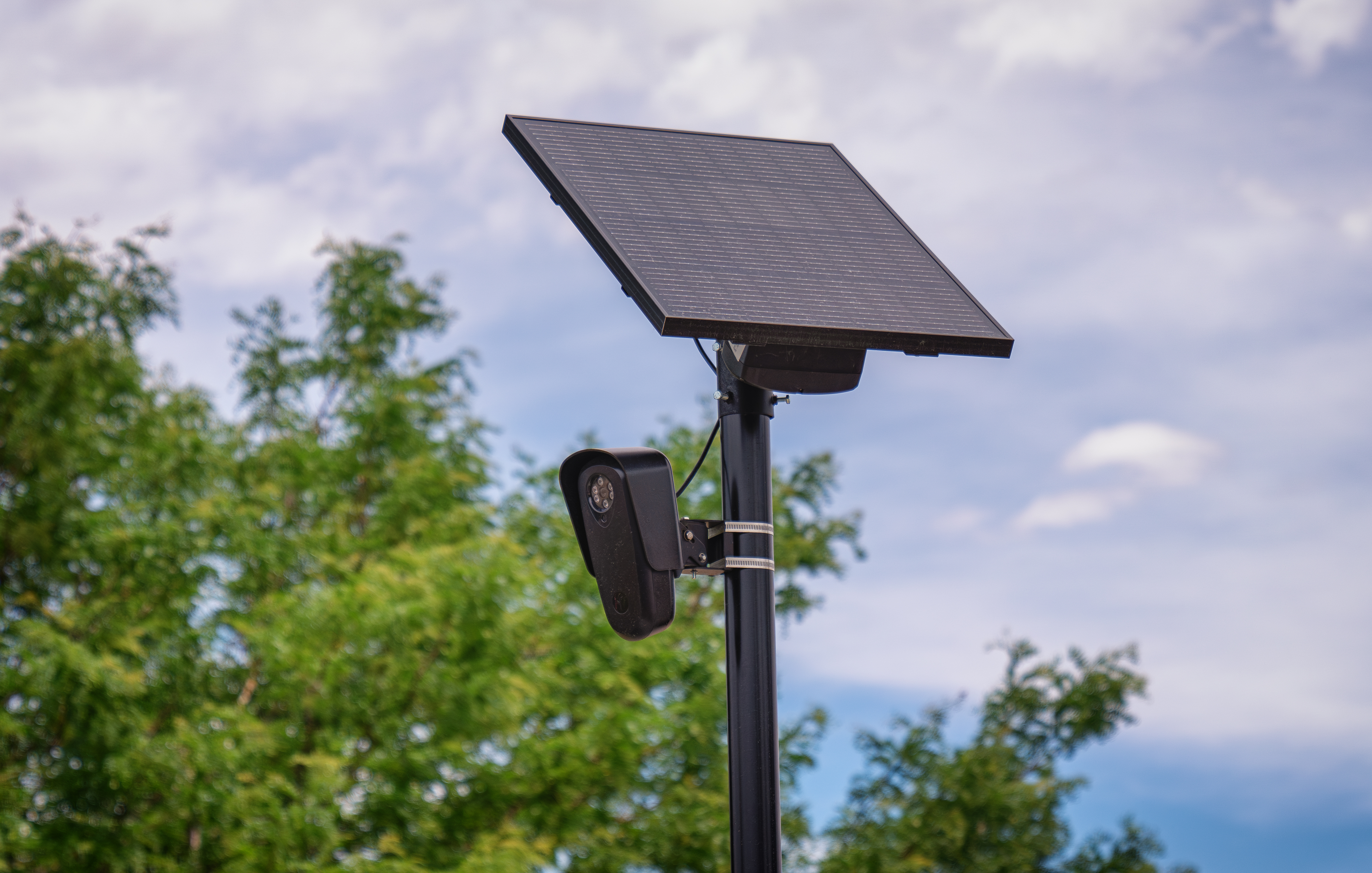
Stanford University has ended its contract with Flock Safety and replaced the company's license plate reader cameras with a new system that keeps vehicle data entirely under university control, the school announced Monday, Aug. 3.
The switch to Montreal-based Genetec's Cloudrunner system comes as the City of Palo Alto prepares its own reckoning with Flock. City Council returns from summer recess Tuesday, Aug. 11, when members are expected to weigh an independent audit of the city's 30 Flock cameras and a potential contract vote.
Stanford's new setup works differently. Cameras at campus entrances capture still images of license plates, vehicle make and model, and identifying features like bumper stickers or damage. That data sits in a cloud server for less than one hour, inaccessible to any third party, before being automatically transferred to a server Stanford exclusively controls. The cloud copy is then permanently deleted.
"Unlike the Flock system, the new system is designed for use within a single institution," said Patrick Dunkley, Stanford's vice provost for institutional equity, access and community.
The distinction matters. Flock operates a shared network across multiple law enforcement agencies. At a June 1 council meeting, Palo Alto Police Chief James Reifschneider acknowledged that hundreds of out-of-state agencies had accessed the city's ALPR data without the department's knowledge. "We took for granted that we understood the universe of features that were available," Reifschneider said at the June 1 meeting.
Stanford says its Department of Public Safety does not share camera data with outside law enforcement or third parties. That policy held under the old Flock contract too. According to the university's annual ALPR report for fiscal year 2024-25, no data was provided to parties external to the university. DPS conducted 1,742 searches across 129 investigations during that period, with 20 personnel authorized to run queries.
The cameras are not designed to capture images of drivers or passengers and are not used to issue citations for moving violations. DPS has used the system alongside security cameras to arrest serial thieves targeting campus offices and packages.
Stanford first installed ALPR cameras in 2024. DPS received no formal complaints about the system during fiscal year 2024-25, though the university noted data privacy was the primary informal concern raised by community members.
The city's situation remains unresolved. Palo Alto's Flock contract costs about $93,500 annually and runs through December 2029. The OIR Group's audit findings are expected after council reconvenes. Stanford's next annual ALPR report, which will cover the Genetec system's first months, is due by Dec. 31.