A new lab at Stanford's Hoover Institution wants to prevent the next DeepSeek-style shock from blindsiding policymakers and markets, and it's recruiting Silicon Valley's private sector to help.
The Tech Futures Lab, funded by a $2.5 million grant from the Menlo Park-based William and Flora Hewlett Foundation, held its inaugural retreat June 23-24 on the Stanford campus. The two-day gathering brought security experts, technologists, and scholars together to game out what the lab defines as "strategic technological surprises," developments powerful enough to invalidate core assumptions and demand a large-scale response.
The lab is co-led by Amy Zegart, the Morris Arnold and Nona Jean Cox Senior Fellow at the Hoover Institution, and Herbert Lin, the Hank J. Holland Fellow in Cyber Policy and Security. Maria Langan-Riekhof, a Hoover distinguished visiting fellow who spent more than 30 years in senior U.S. intelligence roles including leading the CIA's Red Cell unit, rounds out the leadership team.
Zegart pointed to the January 2025 DeepSeek episode as Exhibit A. When the Chinese AI company released its open-source model, Nvidia lost roughly $600 billion in market value in a single day, and the Nasdaq dropped about 3%. Zegart said Stanford researchers had tracked China's growing AI capability for months before the release caught Washington off guard.
"That was a powerful lesson that surprises are not surprises to everybody," Zegart said at the June retreat, according to a Stanford University report published Tuesday, July 21.
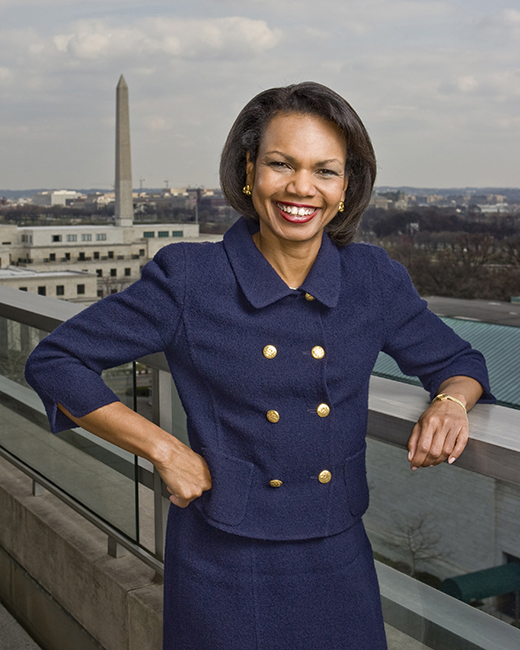
The retreat opened with a conversation among Condoleezza Rice, director of the Hoover Institution and former U.S. secretary of state; John Hennessy, Stanford president emeritus and Alphabet chairman; and Arati Prabhakar, former director of DARPA. Rice, who served as national security adviser on Sept. 11, 2001, said the intelligence failures of that day offer direct lessons for AI risk: agencies detected activity but couldn't imagine how it would manifest, information wasn't shared across silos, and no playbook existed for the aftermath.
"By the time you've built out that structure, the technologies are in another time zone," Rice said, describing how AI advances faster than government can organize a response.
Participants ran scenario exercises posing questions like "What if deepfakes become convincing enough to fuel massive, state-backed disinformation campaigns?" and "What if Google, Meta, and Tesla were more powerful than the U.S. government?"
The Hewlett Foundation's $2.5 million grant to Hoover was part of a broader $10 million package announced February 10 across 13 institutions focused on national security and frontier technologies. Vanderbilt University received the other anchor grant of equal size.
The lab has already published its first paper, co-authored by Lin and Langan-Riekhof, titled "Anticipating and Navigating Strategic Technological Surprise." Later in 2026, the lab plans to invite private-sector tech leaders to participate in crisis exercises, according to the Stanford report, though specific dates and format have not been announced.
The next Technology Policy Accelerator event is scheduled for Wednesday, September 23.