A bill advancing in the California Legislature would effectively lock in the El Camino Real bike lanes for up to two decades, removing any local option to restore the on-street parking that small business owners along the corridor have fought to bring back.
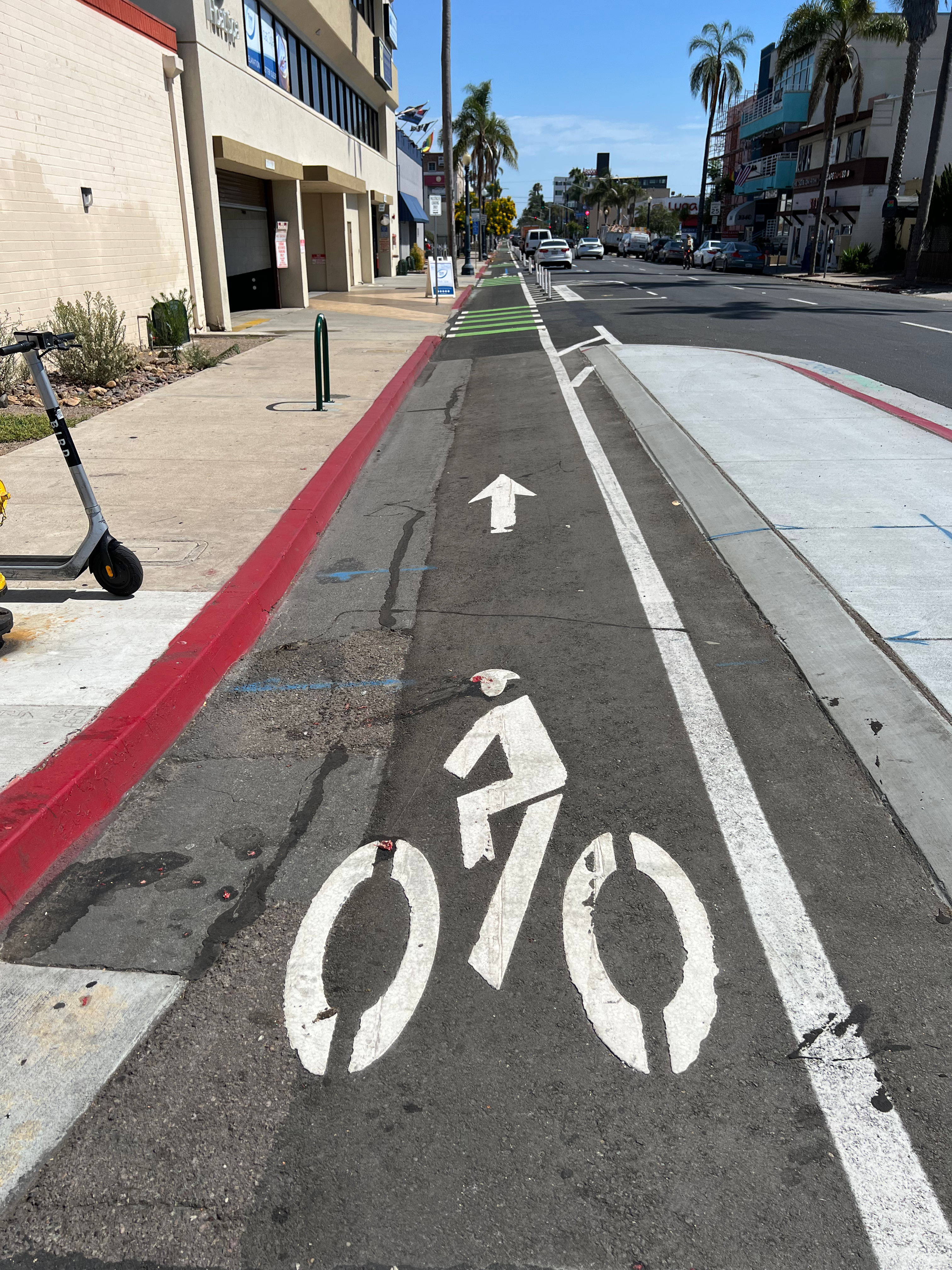
SB 569, authored by Sen. Catherine Blakespear (D-Encinitas) and sponsored by the California Bicycle Coalition, would prohibit any bikeway built with state General Fund money from being removed or modified in a way that reduces safety or mobility for cyclists and pedestrians. The prohibition would last 20 years from the date of the state funding allocation, or the bikeway's documented useful life, whichever is shorter.
The El Camino Real bike lanes, installed by Caltrans as part of a repaving project and celebrated at an October 2025 ribbon-cutting, were built with state funds. If SB 569 becomes law, they qualify.
The bill passed the Assembly Transportation Committee on June 29 and was ordered to a third reading on July 1, according to legislative records. It still needs a full Assembly floor vote and the governor's signature. The Legislature typically sends bills to the governor by mid-September.
What the bill requires
For bikeways not built with state money, SB 569 would still add procedural hurdles: any city seeking removal would first have to conduct a safety analysis and a Level of Traffic Stress analysis, present public findings and hold a community comment period. The bill includes a legislative finding that it addresses a statewide concern, meaning it would apply to all California cities, including charter cities like Palo Alto.
A coalition of more than a dozen transportation organizations wrote to Assembly Transportation Committee Chair Lori Wilson on June 15 in support, citing bikeway removal controversies in Culver City, San Mateo and two San Diego-area locations.
The El Camino parking fight
The bill lands in Palo Alto amid an ongoing dispute over the bike lanes' impact on El Camino Real businesses. The lanes replaced on-street parking along the corridor, and nearly 200 people had signed a petition by early April calling on city leaders to find a compromise.
Tony Lee, owner of Stanford Coin Wash at 2045 El Camino Real, told Palo Alto Online in April that his business had lost at least 25% of its revenue since the lanes went in. "It's a long block between Oxford and Stanford avenues on El Camino," Lee said. "That's walking three blocks for some of these people, and they would not choose to do that."
Because El Camino Real is a state highway under Caltrans jurisdiction, Palo Alto's authority over the corridor is already limited. Cars and delivery trucks have been ticketed for blocking the lanes.
Council member Pat Burt said at a Jan. 22 retail committee meeting that El Camino has historically hosted the city's most affordable retail. The council has made "enhance business vibrancy" a 2026 priority and is creating zoning nodes requiring ground-floor retail in new El Camino developments, according to Palo Alto Online.
What's next
SB 569 must still pass the full Assembly and be signed by Gov. Gavin Newsom. Palo Alto's Office of Transportation has not said publicly what the bill would mean for the city's options on El Camino Real.