Software engineers aged 22 to 25 have seen employment drop nearly 20% since late 2022, according to a Stanford Digital Economy Lab study.
For Palo Alto families sending kids off to college with visions of Silicon Valley careers, the numbers land hard.
The study, titled "Canaries in the Coal Mine" and released in August 2025, used payroll records from millions of American employees provided by ADP. Authors Erik Brynjolfsson, Bharat Chandar, and Ruyu Chen found that early-career workers in the most AI-exposed occupations experienced a 13% relative decline in employment since late 2022. Workers aged 35 to 49 in the same fields saw employment grow by more than 9% over the same period.
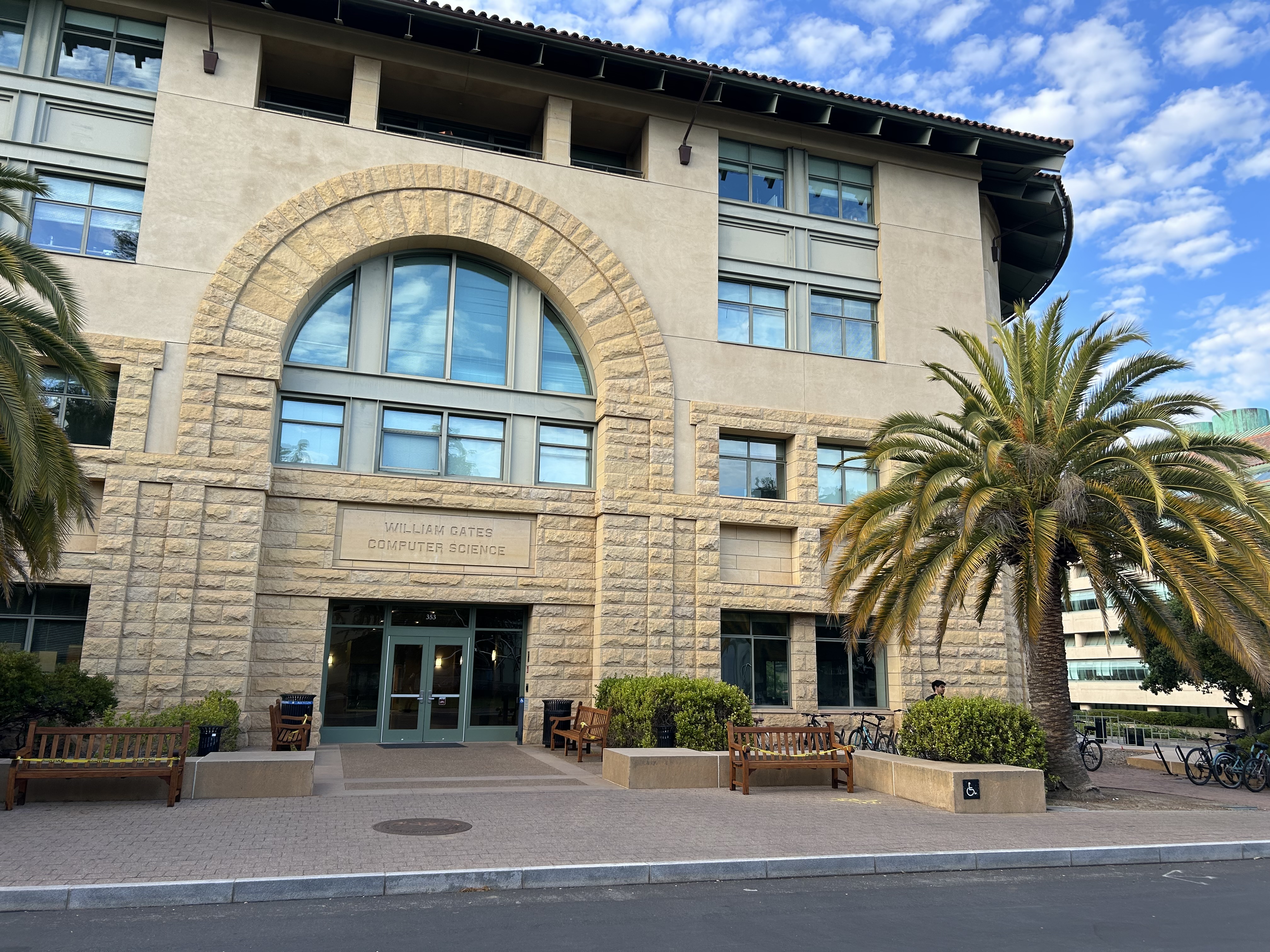
The pattern is visible locally. Jan Liphardt, associate professor of bioengineering at Stanford, told the Los Angeles Times in December 2025 that Stanford computer science graduates were struggling to find entry-level jobs with prominent tech companies. "That's been a dramatic reversal from three years ago, when all of my undergraduate mentees found great jobs at the companies around us," Liphardt said.
Amr Awadallah, CEO of Palo Alto-based AI startup Vectara, put it bluntly in the same report: companies are replacing ten junior developers with two experienced engineers and an AI agent.
A CNBC survey of nearly 800 students conducted in April 2026 found that 4 in 10 have considered changing their field of study because of AI.
Meanwhile, AI is doing more of the science
The same week that data circulated, Stanford's Human-Centered AI institute published an overview on July 8 showing how AI tools built on campus are already doing work that once required teams of researchers. Biomni, a biomedical AI agent developed by scholars at Stanford, Genentech, and other institutions, has been used by 15,000 scientists to automate 100,000 different scientific workflows. Evo 2, a DNA language model funded initially by a Stanford HAI grant, is the largest AI model ever trained for biology.
However, a Stanford study that pitted 100 human NLP experts against AI-generated research ideas found a key limit: AI proposals were judged more novel, yet humans produced more feasible work. When project execution was factored in, humans prevailed.
"While LLMs have excellent technical creativity, humans come up with more practical proposals, given they are grounded in existing research," said Chenglei Si, a PhD candidate in Stanford's NLP Group who led that study.
What PAUSD has done so far
PAUSD has revised its generative AI classroom guidelines every year since the 2022-23 school year. The district's 2025-26 policy, published on its website in January 2026, states its goal is preparing students to "use AI thoughtfully and effectively, ready to thrive in a changing world." No date has been announced for a 2026-27 update, though the district has released new guidelines each fall.
The Board of Education adopted a $369-million budget for 2026-27 on June 16. The budget does not break out AI-specific curriculum spending.
Four in 10 college students reconsidering their majors because of AI. A 20% employment drop for the youngest software engineers. For Henry M. Gunn High School and Palo Alto High School students picking courses and planning applications, the question is no longer whether AI will change their career paths but how fast.